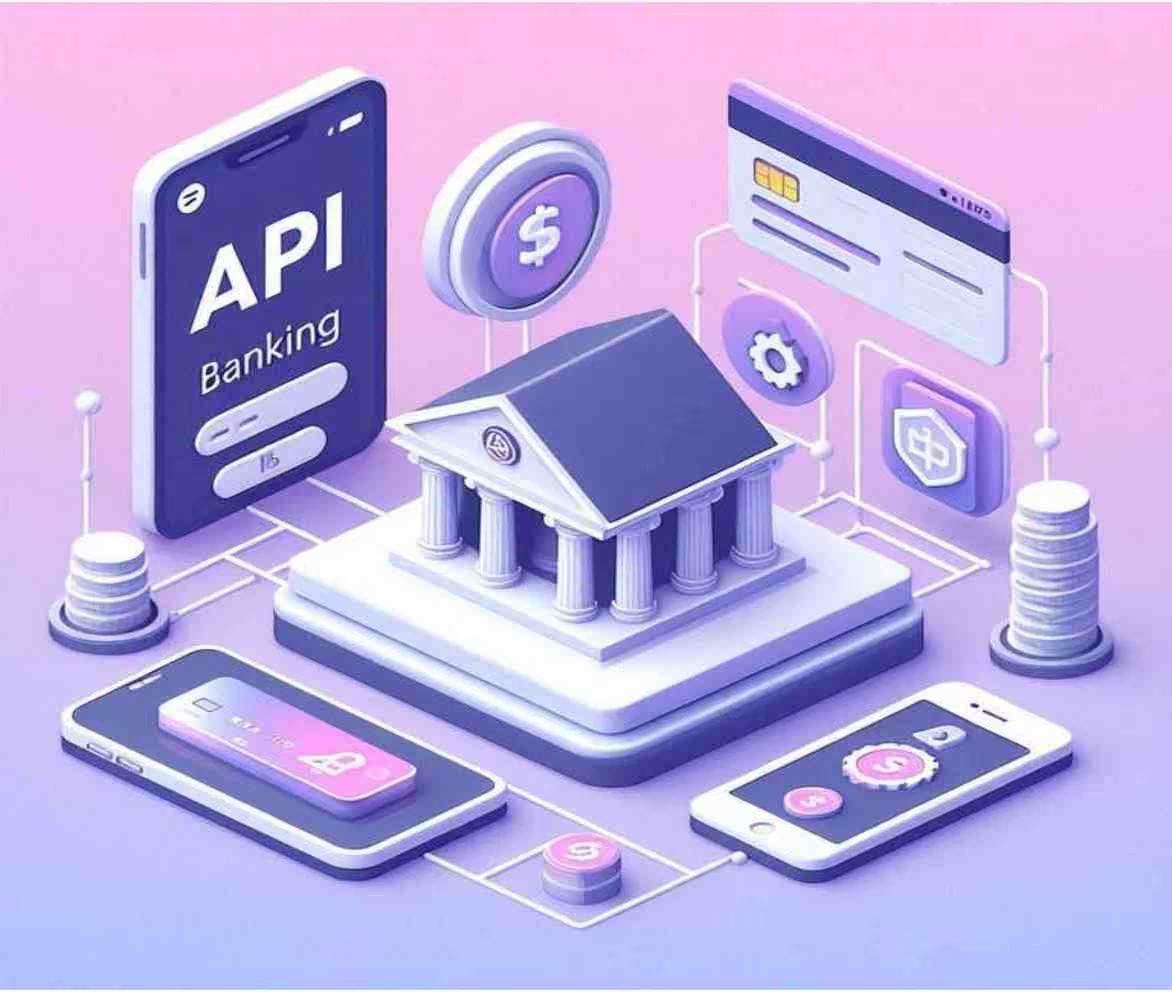
What is API Banking and How Does It Work-Shelly Banking has evolved far beyond waiting in long lines at branches and endless paperwork. Nowadays, many of us can expect our money to move at the pace of a single click. It does not really matter if we are paying for groceries with a mobile wallet or sending money abroad, we expect it to be done instantly, securely, and without any hassle. This is where API Banking comes in. Short for Application Programming Interface Banking , it’s the technology that helps banks and third-party apps like fintech platforms, digital wallets, and accounting software to connect and exchange data instantly. In this article, we’ll simplify API banking and show how it’s helping businesses save time, reduce errors, and grow smarter—with real-world use cases you can relate to.
If you have ever used Google Pay, PayPal, or even checked your bank balance on any budgeting app, you have already experienced API Banking in action.
How API Banking Works? Think of APIs like digital bridges. They allow one system, say, your bank to communicate securely with another system like a mobile app without exposing your sensitive or personal data.
Here’s how it works step by step :
The Bank’s Core System holds all account data, balances, and transaction history.
The API Layer acts as a messenger, sending and receiving only the data that’s needed.
The Application – a fintech app, payment gateway, or even an accounting platform—uses that data to deliver services to you.
Example: You want to pay a friend or check your balance on Google Pay. You tap once, and behind the scenes, the app’s API chats with your bank, fetching your data instantly. What used to take time now happens in a flash.
Imagine if your invoices, GST filings, and payments could flow just as smoothly.
With Swipe’s cloud-based accounting software , your financial data stays connected and always up to date—no manual entries needed
Core Features of API Banking
Feature What it Means Why it Matters Real-Time Access Data is updated instantly Faster payments and transactions Security Uses protocols like OAuth and SSL Protects against fraud Flexibility Custom APIs for different industries Fits Businesses from e-commerce to real estate Scalability Works for small startups or global banks Grows with your needs Cost Efficiency Reduces manual work & legacy costs Saves time and money
Why API Banking Is a Game-Changer For Banks Makes services faster and more customer-friendly.
Creates opportunities to partner with fintechs.
Supports Banking-as-a-Service (BaaS).
For Businesses Smooth integration with payment gateways and billing systems.
Easier compliance with government rules like e-invoicing and e-way bills see Swipe e-invoice.
Improved financial tracking with cloud-based accounting software.
For Consumers Convenient apps for payments, loans, and investments.
Personalized services according to real-time data.
Safer and more transparent transactions.
Traditional Banking Vs API Banking
Aspect Traditional Banking API Banking Access Branch visits, forms Anytime,anywhere via apps Speed Often delayed Real-time Flexibility Limited services Works with fintechs and platforms Scalability Hard to upgrade Cloud-ready Experience One-size-fits-all Personalized
Real Life Uses of API Banking Faster hassle-free transactions: API banking helps handle refunds, payments, and reconciliations instantly saving your time and reducing unnecessary stress.
Versatile sector support: It makes managing sales, bookings, rent, and subscriptions easy for online stores, travel agencies, real estate businesses, and startups.
Clean Financial Visibility: All your cards, apps, and bank accounts come together in one place via API, giving you a real-time view of revenue, expenses, and profits.
Automation reduces errors: Reports, invoices, and reconciliations can be very easily automated , cutting down on manual work and mistakes.
Secure and reliable: It provides multi-level authentication and encryption thus keeping every transaction safe and secure.
Focus on growth: It manages your finances thus your finances stay organized which can help you spend more time on innovating, serving customers, and growing your business.
Swipe APIs bring billing, e-invoicing, payments, and more into your workflows seamlessly powering CRMs, online stores, websites, and ERPs. Join the community and start building now
Challenges With API Banking While it’s changing the game, API Banking does have a few challenges:
Security Risks : Make sure your APIs use strong security protocols like Oauth, API keys, or JWT tokens, and use SSL for encryption. Data should be encrypted to keep your customers’ information and transactions safe.
Compliance: Banks must follow the rules like RBI guidelines, GDPR, and other regulations as staying on top of rules isn’t optional it’s utmost necessary.
Integration Issues: Older banking systems can sometimes struggle when connecting with new APIs, so expect a few bumps and plan accordingly beforehand.
Privacy Concerns: Always be upfront with your customers. Get their consent and clearly explain how their data will be used – this should never be an afterthought.
Reserve Bank of India offers regulatory insights on secure digital banking.
What the Future Looks Like The future of banking is inseparable from APIs. We’ll see:
Growth in neo banks that operate entirely online.
Wider adoption of Banking-as-a-Service platforms.
APIs powered by AI and machine learning for smarter insights.
Industry-specific solutions—like real estate APIs or e-commerce payment APIs.
Just as cloud-based accounting software has transformed bookkeeping. APIs are now redefining financial services. For deeper insights, you can explore the official documentation.
Conclusion API banking isn’t just a trend, it’s the engine driving the future of finance. Real-time connections between banks, fintechs, and businesses are already changing how companies operate, making payments, invoicing, and reporting faster, smarter, and seamless.
If your business uses API based tools like e-invoicing, cloud accounting, and automated billing you are not just saving time – you are gaining a competitive edge and this is only the beginning. The financial landscape keeps changing constantly with digital payments, open banking, and emerging technologies reshaping how money moves everyday.
To automate your invoices and manage taxes effortlessly plug into the future of finance today with Swipe’s accounting software. The faster you adapt, the more your business thrives.
FAQs 1. What does API Banking mean in simple words? It’s just a different way for apps and banks to talk to each other securely and instantly.
2. How is it different from Open Banking? Open Banking is the broader concept of banks sharing data; API Banking is the technology that makes it possible.
3. Is API Banking safe? Yes, safe when protected with proper security protocols like tokenization, OAuth 2.0, and encryption.
4. Why should businesses care about API Banking? Businesses should care about it because it speeds up payments, simplifies compliance by e-invoicing, e-way bills, and integrates easily with accounting tools.
5. Which industries are using API Banking most? E-commerce, travel, real estate, fintech startups, and even traditional small businesses are now using it in their businesses.