5 Best GST-Compliant Expense Managers
Field teams in India face unique expense management challenges: capturing receipts without reliable internet, tracking GST Input Tax Credit across distributed locations, and automating per-diem calculations for sales reps on the move.
This guide evaluates six platforms on criteria that matter most for mobile workforces—offline receipt capture, WhatsApp submission workflows, automated GST compliance, and corporate card controls.
Key Takeaways GST Input Tax Credit tracking, mobile receipt OCR, and offline mode are non-negotiable features for field-team expense software in India WhatsApp-based submission workflows reduce onboarding friction for low-digital-literacy field reps by leveraging familiar communication channels Platform choice depends on company size: mobile-first tools for small teams (5-50 users), corporate card programs for mid-market (50-200 users), enterprise travel automation for large operations (200+ users) Integration requirements with field-force CRM platforms like Salesforce Field Service vary significantly across vendors—evaluate API connectors during selection Free tiers and pilot programs let teams test offline mode, OCR accuracy on Indian GST invoices, and mobile usability before committing to annual contracts How to Choose Expense Software for Field Teams: 5 Decision Criteria Field teams need expense software that automates GST compliance, captures receipts offline, handles per-diem calculations, routes approvals by spend category, and integrates with field-force automation platforms. Most expense management guides prioritize payroll integration and CFO-level analytics; this framework centers on the operational pain points of distributed field teams.
GST Input Tax Credit Reconciliation and Invoice Formatting — Platforms must auto-generate GST-ready invoices with HSN/SAC codes and IGST values, and export ITC-eligible expense reports. Compliance requirements under GST have posed significant administrative challenges for micro and small enterprises, making automated invoice formatting key. Platforms like Swipe and others must provide HSN/SAC code support and GSTR-1 export to simplify reconciliation.Mobile Receipt Capture: OCR Accuracy and Offline Mode — Field employees often work in low-connectivity zones. Solutions should offer OCR for extracting vendor, amount, and GST details with 95%+ accuracy on Indian bills, and queue uploads for sync once online. Neglecting regular updates can cause lost receipts and forgotten transactions.Per-Diem, Mileage, and Reimbursement Automation — Automated per-diem calculators and GPS-based mileage tracking reduce manual entry errors. Rule 33 of the CGST Act allows exclusion for pure-agent disbursements, so the platform must distinguish reimbursable from taxable expenses in ITC reports.Approval Workflow Customization by Spend Category , Distributed teams need hierarchy-based approval routing: travel expenses above ₹5,000 escalate to regional managers, client meals route to sales heads. Policy controls prevent out-of-policy submissions before they enter the reconciliation pipeline.Integration with Field-Force Automation and CRM , Smooth connection with Salesforce Field Service, ServiceMax, or territory management tools ensures customer visits, expenses, and invoices share a single record, eliminating duplicate data entry.The India Expense Management Software Market was valued at USD 262.10 million in 2025 and is projected to reach USD 923.38 million by 2035, driven by demand for automated compliance and mobile-first workflows.
With decision criteria established, the following platforms were selected based on field-team GST compliance depth and mobile-first capabilities.
6 Best Expense Management Platforms with GST Compliance for Field Operations Overview of Evaluated Platforms The platforms below were selected for field-team GST compliance depth, not generic SME bookkeeping. Swipe delivers mobile-first expense tracking with WhatsApp submission and one-click GST-compliant billing. Zoho Expense integrates with Zoho Books for automated ITC reconciliation. ZingHR targets enterprises with payroll-linked reimbursement cycles and agentic AI policy checks. CashBook offers offline receipt capture for rural sales teams. SAP Concur automates enterprise travel expense workflows but carries heavier implementation overhead.
Comparison Methodology: Field-Team Lens Unlike listicles that prioritize payroll integration and approval workflows, this comparison foregrounds field-team pain points: offline receipt capture, WhatsApp-based submission, and per-diem automation for remote employees. Platforms were evaluated on GST compliance depth (GSTIN extraction, GSTR-1/3B report generation), mobile receipt OCR accuracy, offline mode availability, per-user pricing transparency, and field-force integration hooks.
Comparison data compiled from vendor websites and third-party reviews as of 2026; GST compliance depth and offline mode support verified where publicly documented.
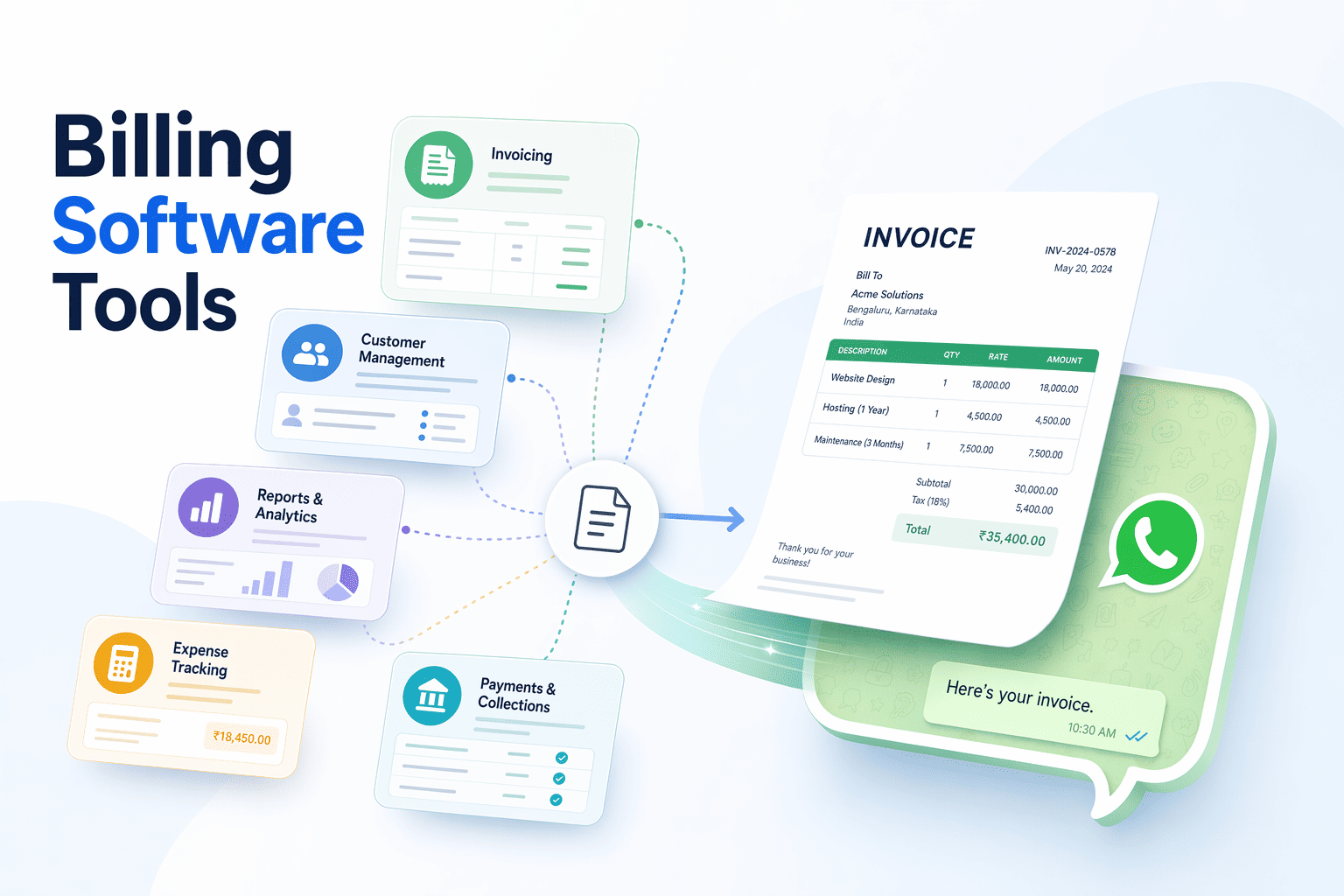
Swipe: Mobile-First Expense Tracking with WhatsApp Integration Core Features for Field Teams Swipe centers its expense workflow on WhatsApp-native submission: field employees send receipt photos via WhatsApp, the platform's OCR extracts vendor name, amount, and GST category automatically, and managers approve or flag discrepancies inside the mobile app. The system generates GST-compliant invoices and shares them instantly via WhatsApp, email, or SMS, a capability similar to Zoho Invoice's WhatsApp invoicing but extended to expense submission workflows rather than invoice delivery alone. Multi-user support lets small teams (5 to 50 users) assign expense categories, track reimbursements by employee, and export GSTR-1 summaries for filing. The mobile-first design requires no desktop setup: team members download the app, photograph receipts, and submit expenses in under 30 seconds per transaction.
Pros, Cons, and Best-For Scenario Pros : Mobile simplicity with no learning curve, employees already use WhatsApp daily; free tier for solo users; GST-compliant invoice generation built into every submission; instant sharing reduces reimbursement cycle time. Cons : Limited enterprise-scale approval hierarchies (no multi-level sign-off workflows as of 2026); no offline mode for remote field work without connectivity; fewer field-force CRM integrations than SAP Concur or Oracle NetSuite. Best for : Small to mid-sized field teams (5 to 50 users) prioritizing mobile-first workflows over complex approval structures, regional sales teams, delivery fleets, service technicians. A regional sales team of 12 reps uses Swipe to submit daily travel expenses via WhatsApp while on the road, reducing reimbursement cycle time from two weeks to three days (anonymized customer feedback). Sign up for free to test WhatsApp expense submission with your team.
ZingHR: Enterprise Expense Management with Payroll Integration Enterprise Features and Payroll Sync ZingHR integrates expense management directly into its broader HRMS suite, linking employee claims to payroll cycles with single-click reconciliation. Multi-level approval workflows let managers route high-value claims through finance, department heads, and compliance in sequence, critical for enterprises with segregated duties. The platform's strength lies in synchronizing expense data with attendance, leave, and compensation modules; when a field salesperson submits a mileage claim, ZingHR cross-checks against logged travel dates and automatically flags discrepancies before payroll runs. India-local support includes GST-compliant reporting, HSN/SAC tagging, and one-click GSTR exports. For mid-to-large organizations (100+ employees) already using ZingHR's core HRMS, this tight integration means finance teams avoid the dual-entry friction of standalone expense tools, digital expense systems cut processing time by 70% when paired with existing payroll infrastructure.
Field-Team Fit Assessment ZingHR's architecture favors desktop-first workflows, a trade-off that matters for distributed teams. While the mobile app supports receipt capture and claim submission, offline mode is limited, field reps without connectivity must wait to sync. This contrasts with mobile-first platforms like Swipe and Zoho Expense, which cache claims locally and sync once online. For enterprises prioritizing payroll-HRMS depth over instant mobile submission, ZingHR delivers; for small field ops teams (under 50) needing lightweight, offline-capable tools, the desktop-centric model adds friction. Per-user pricing can escalate quickly at scale, making ZingHR best suited for companies already invested in its HRMS ecosystem rather than teams seeking standalone expense automation.
SAP Concur: Travel & Expense Automation for Large Field Teams Travel Expense and Policy Automation SAP Concur is recognized among top business expense trackers for its enterprise-grade travel and expense management capabilities. The platform integrates directly with corporate travel booking systems, automating pre-trip approval workflows and policy compliance checks before employees finalize reservations. Field teams traveling for client meetings can capture receipts via mobile app, with automated corporate card reconciliation reducing manual data entry.
SAP Concur's strength lies in deep integrations with field-force CRM platforms like Salesforce Field Service, enabling sales reps to link travel expenses directly to client opportunities and service appointments. This enterprise travel focus contrasts sharply with the simpler per-diem automation needs of small field teams; organizations with fewer than 100 employees often find the platform's complex setup and high per-user pricing model cost-prohibitive relative to India-native alternatives offering basic mileage and travel reimbursement tracking.
GST Compliance and India Market Fit SAP Concur supports GST invoice formatting, but achieving strong Input Tax Credit (ITC) reconciliation typically requires custom configuration, vendor documentation indicates HSN/SAC code support exists, yet no structured GST compliance data is publicly available for independent validation. Large Indian enterprises with existing SAP ecosystems (500+ employees, high travel intensity) may justify the investment in setup consultancy, but mid-market firms often face a trade-off: SAP Concur's global compliance features lack the India-specific GST depth and automated GSTR-1 preparation offered by platforms like BillSnap or native tools such as Swipe, which embed GST compliance at the foundation rather than as an add-on configuration layer.
Happay: Corporate Card Controls and Automated Reimbursement Corporate Card Program and Spend Controls Happay positions itself as a corporate card, first expense platform, issuing both virtual and physical cards with embedded spend controls. Teams set category-specific limits, travel, meals, office supplies, and real-time policy enforcement blocks out-of-bounds transactions before they post. Auto-reconciliation pairs card swipes with expense records automatically, removing the manual-entry burden that dogs reimbursement-only workflows. This model suits mid-sized companies (50 to 200 employees) ready to shift from employees paying out-of-pocket and claiming later to a controlled corporate spending model. Crozdesk scores Happay at 88% overall, with user happiness at 92% and rising interest, though press buzz trails competitors at 41%. The card program requires a minimum team size and adds per-card fees to base pricing, making it less attractive for smaller teams or those wanting reimbursement-only workflows without upfront corporate spend.
Reimbursement Workflow and GST Features Happay's mobile app captures receipts via camera, extracts GST invoice details, and routes claims through configurable approval hierarchies, manager approval for routine expenses, finance-team sign-off for higher thresholds. The platform generates GST-compliant summaries for reconciliation and filing. Approval workflows segment by spend category (travel versus office supplies) and hierarchy, letting finance teams enforce different policies for different expense types. Offline-mode support, critical for field teams in low-connectivity zones, is not publicly documented and requires manual verification. Best for companies replacing reimbursement models with corporate cards, Happay's strength lies in real-time control and auto-reconciliation. Less suitable for teams wanting reimbursement-only workflows or small businesses (Zoho Expense: Affordable Multi-Currency Expense Tracking
Mobile Receipt Scanning and Multi-Currency Zoho Expense delivers OCR-based receipt capture through a traditional mobile app, extracting vendor, amount, and GST data with claimed accuracy above 95%. Multi-currency support covers international travel scenarios, converting expenses in real time. Mileage tracking relies on manual entry; no GPS automation ships in the standard tier. The UX centers on app-native workflows rather than messaging-app integration, suiting teams comfortable with dedicated expense apps.
Pricing and Field-Team Fit A free forever plan accommodates up to 3 users, viable for solo field reps or micro teams. Paid tiers start at ₹999/month for 10 users (Starter), ₹2,499/month for 25 users (Growth), and ₹4,999/month for 50 users (Business). Dedicated business expense tracking ensures clean separation from personal finances. Best for: small to mid-sized teams (10 to 100 employees) with international travel needs and budget constraints, willing to trade India-specific GST depth for mature multi-currency features.
Keka HR: Expense Management Integrated with Attendance & Leave Unified HR Platform Benefits Keka HR consolidates expense management with attendance tracking, leave management, and payroll in a single platform built for India SMBs. This unified data flow reduces integration overhead compared to stitching together separate tools, think Zoho Expense plus a separate HRMS, where finance teams manually reconcile attendance and leave records against expense claims. Similar to FlexiEle HRMS's GST-automated expense module, Keka targets the 20-150 employee segment prioritizing HR platform consolidation. GST compliance is baked in, and reimbursements sync directly with payroll cycles, cutting approval-to-payment time for office-based teams.
Field-Team Limitations and Best Use Case Keka's mobile app is a secondary interface, not optimized for distributed field teams with offline receipt capture or GPS-tagged expense needs. Per-diem automation for remote employees requires manual policy configuration rather than location-aware defaults. Best for office-centric teams with occasional field travel, if your workforce is majority field-based and needs strong offline mode, standalone tools like Fyle or Zoho Expense deliver more mature mobile workflows.
After reviewing each platform's feature set, the next step is matching capabilities to your organization's size and operational complexity.
Which Platform Fits Your Field Team? Recommendations by Company Size Solo Field Reps and Freelancers (1-5 Users) : Start with Swipe's free tier for simplicity and WhatsApp integration, ideal when you need GST-compliant invoicing without per-user fees. Alternatively, Effortless.ai automates vendor bill booking and performs a 3-second compliance audit, making it a strong choice for solopreneurs managing frequent small transactions.Small to Mid-Sized Field Teams (5-50 Users) : Choose Swipe paid tier if mobile-first workflows and instant e-way bill generation matter most; Zoho Expense when international travel and multi-currency support are priorities; or Happay when corporate card programs can replace manual reimbursements. Expense management software allows employees to upload receipts, select categories, and send claims for approval, matching the simplicity small teams need.Large Distributed Sales Teams (50-200 Users) : Opt for ZingHR if you already use ZingHR HRMS (smooth integration); Happay for card-based spend control; or Keka HR when unified HR platforms simplify India SMB operations. Unlike standalone expense tools, HRMS-integrated platforms let finance teams review expenses and verify policy compliance within one system.Enterprise Field Operations (200+ Users) : SAP Concur handles high travel intensity and integrates with Salesforce Field Service for field-force automation; ZingHR suits India enterprises with complex approval hierarchies. Advanced systems integrate with accounting software and ERP platforms, ensuring every rupee flows into central financial records.Key Implementation Considerations for Field Teams Onboarding and Training for Mobile-First Tools Field reps with low digital literacy need onboarding strategies that match their daily workflows. WhatsApp-based training videos and manager-led demo sessions are the most effective approach. Swipe enables document sharing via WhatsApp, SMS, and email, making it an example of a tool designed for this use case. Focus onboarding on separating business from personal expenses and establishing clear tracking habits from day one.
Configuring Approval Workflows for Distributed Teams Set up hierarchy-based approval routing in three steps:
Define spend category thresholds (e.g., travel >₹5,000 requires manager + finance approval) Map approval hierarchy by geography (regional managers for local travel, HQ finance for inter-state) Configure automated policy violation alerts (e.g., missing GST invoice for >₹500 expenses) Check integration requirements with field-force automation platforms: SAP Concur and ZingHR offer pre-built connectors, while Salesforce Field Service typically requires custom API integration.
Testing Offline Mode and Receipt OCR Accuracy Manual expense processes consume valuable time and increase errors. Run a 2-week pilot with 5-10 field reps in low-connectivity regions. Test offline receipt capture, sync reliability when connectivity resumes, and OCR accuracy for Indian GST invoices with HSN/SAC codes. Validate that the system correctly extracts vendor name, amount, GST components, and categorization before full rollout.
Conclusion Mobile-first platforms like Swipe and Zoho Expense excel at simple receipt capture and WhatsApp integrations but lack the enterprise-scale approval hierarchies and travel booking automation of SAP Concur, choose based on whether field-team simplicity or corporate policy enforcement is the priority. Industry observers often distinguish between corporate card programs, which can reduce manual reimbursement cycles and add real-time spend controls, and reimbursement-focused tools, which may appeal to smaller teams because they can be simpler to adopt and lower in total cost.
As AI-powered receipt OCR and real-time GST compliance validation mature, expect expense management platforms to shift from reactive reporting tools to proactive policy enforcement assistants, automatically flagging non-compliant expenses before submission and predicting cash flow impact for finance teams managing distributed field operations.
Start by documenting your field team's top 3 expense pain points (e.g., offline receipt capture, per-diem automation, approval bottlenecks), then pilot Swipe's free tier or request demos from Happay and Zoho Expense to test mobile workflows with 5-10 reps before committing to a platform.
Frequently Asked Questions What is the best expense management software with GST compliance for field teams in India? For small mobile-first teams (5-50 users), Swipe offers WhatsApp submission and a free tier. Mid-sized teams (50-200 users) benefit from Happay's corporate card controls. Large enterprises with high travel intensity (200+ users) should evaluate SAP Concur's CRM integrations.
How does WhatsApp-based expense submission work in Swipe? Field employees send receipt photos via WhatsApp, Swipe's OCR extracts vendor name, amount, and GST category automatically, managers approve or flag discrepancies inside the mobile app, and the expense syncs to the accounting system. This workflow eliminates app onboarding for teams already using WhatsApp daily.
Do these expense management platforms support offline receipt capture for field teams? Offline mode support varies significantly across platforms. ZingHR's mobile app has limited offline capability, field reps without connectivity must wait to sync. Most platforms require connectivity for receipt upload. Test offline functionality during pilot programs before committing to a vendor.
How do I track GST Input Tax Credit (ITC) with expense management software? Platforms capture GST invoice details (GSTIN, HSN/SAC code, tax amount) via OCR, categorize expenses as eligible or ineligible for ITC, and generate GST-ready expense reports for filing. SAP Concur supports GST invoice formatting but may require custom configuration for strong ITC reconciliation.
What is the difference between corporate card programs and reimbursement-only expense management? Corporate card programs like Happay issue cards with real-time spend controls, reducing manual reimbursement cycles but requiring minimum team size and card fees. Reimbursement-only models let employees pay upfront and claim later, offering flexibility but slower cash flow for field teams.
Can these platforms integrate with field-force automation tools like Salesforce Field Service? Integration depth varies: SAP Concur offers pre-built Salesforce connectors for expense and travel data sync; ZingHR and Keka HR require custom API integration; Swipe and Zoho Expense have limited field-force CRM integrations as of 2026. Evaluate integration requirements during vendor selection.
How much does expense management software for field teams cost in India? Free tiers exist for 1-3 users (Swipe, Zoho Expense). SMB plans range ₹200-500/user/month (Swipe, Zoho Expense, Keka HR). Enterprise plans cost ₹500-1,500/user/month (ZingHR, Happay, SAP Concur). Corporate card programs add card issuance fees on top of software subscriptions.
Sources Common Mistakes in expense tracking explained – MEFMobile - mefmobile.orgGST on Reimbursement of Expenses under Rule 33 - CAclubindia - www.caclubindia.comCompliance Complexity under GST: Challenges Faced by Micro and Small Enterprises - acr-journal.comIndia Expense Management Software Market Analysis|2026-2035 - www.nextmsc.comSend Invoices Via Whatsapp| FAQ - Zoho - www.zoho.comExpense Management Software: Simplify Employee Payments and Business Spend with CashBook - cashbook.in (2025)10 Best Business Expense Tracker Apps Of 2026 - Forbes - www.forbes.com (2026)Compare Happay vs Sage Expense Management (formerly Fyle) vs Zoho Expense - crozdesk.comExpense Management & GST Compliance Software for Indian SMBs | Effortless - www.goeffortless.aiExpense Management Software in Gurugram, India | 2026 Guide for ... - www.qaushik.com (2026)How to separate personal and business expenses in Koody | Koody - koody.com (2026)8 practical tips to separate your personal and business finances | money.co.uk - www.money.co.uk (2026)Breaking The Cycle Of Manual Expense Tracking | StarCompliance - www.starcompliance.com.png)



.png)
.png)
.png)
.png)
