6 Affordable GST Billing Picks for Small Retail in India Small retail shops in India face a steep learning curve when selecting GST billing software — balancing compliance requirements against tight budgets.
This guide maps six affordable solutions across the ₹0–₹5,400 annual range, showing how invoice volume and inventory complexity determine your ideal tier.
Key Takeaways Affordable GST billing software for Indian small retail spans ₹0–₹5,400 annually, with free-forever plans covering kirana stores under 100 invoices/month Kirana stores generating 30–80 invoices/month stay within free-tier limits; apparel and electronics shops handling 100 to 200 invoices/month require paid plans with variant tracking E-invoicing becomes mandatory only above ₹40 lakh turnover in 2026, allowing micro-retailers to use free-tier software without compliance gaps Switching costs (data migration, staff training) often exceed first-year subscription fees, match invoice volume to the right tier before committing Mobile-first billing apps reduce invoice generation time by 60% versus desktop-only solutions, critical for counter-based retail operations What Makes GST Billing Software Affordable for Small Retail Shops Affordable GST billing software for small retail shops in India spans a ₹0, ₹5,400 annual range. Four options anchor this bracket: Swipe's free-forever plan, Vyapar's ₹1,999/year tier, Zoho Books at ₹2,499/month, and Accountune at ₹799/year. This article moves beyond generic feature lists by adding pricing transparency, hidden-cost alerts, and shop-type segmentation.
Defining Affordable: Free Tiers, Annual Plans, and Hidden Costs "Affordable" here means upfront clarity: free-forever tiers (Swipe, Billman's free mobile app), annual subscriptions under ₹3,000 (Accountune ₹799/yr, Vyapar ₹1,999/yr ), and no per-invoice transaction fees . Hidden costs sabotage budget planning. Watch for: (1) transaction-fee traps , free tiers charging ₹5, ₹10 per invoice after 50 bills/month; (2) export paywalls , GSTR-1 JSON locked behind ₹5,000/year tiers; (3) customer-support gates , phone support only above ₹8,000 plans. Accurate GST billing prevents rejected Input Tax Credit and ₹10,000+ penalty risks. Paying ₹4,000/year for compliant software is cheaper than one penalty notice.
The Four-Pillar Comparison Framework We evaluate each tool on four dimensions: (1) Pricing structure , annual vs monthly, free-tier limits, per-user fees; (2) GST compliance depth , e-invoicing, GSTR-1/3B readiness, HSN/SAC validation; (3) Mobile functionality , offline billing, barcode scan, Android/iOS parity; (4) Inventory management , real-time stock sync, low-stock alerts, multi-location tracking. A ₹2,000/year tool missing offline mode fails shops with unstable internet; a ₹0 plan capping 100 invoices/month fails grocery stores hitting 500 bills monthly. The next sections apply this framework to six named solutions, matching each to shop size and category.
Understanding what defines affordability sets the baseline; now compare how leading platforms price their features across the ₹0, ₹5,400 spectrum.
Pricing Breakdown: Annual Costs for Popular GST Billing Software in India Free-Tier Limits and Paid-Plan Entry Points The table below compares annual costs for six popular GST billing platforms serving small retail shops in India. Free-tier invoice caps matter when your volume grows, Swipe offers unlimited invoices on its free plan, while Vyapar caps you at 500/year before requiring the ₹5,400 paid upgrade. Zoho Books gates its free tier by revenue (₹50 lakh turnover) rather than invoice count, then steps to ₹3,000/year for the Standard plan. MyBillBook starts at ₹3,999/year with no free option, and TallyPrime begins at ₹18,000+/year for Windows-only deployment.
PlatformFree Tier LimitEntry Paid Plan (Annual)PlatformSwipeUnlimited invoices₹1,299/yearAndroid, iOS, WebVyapar500 invoices/year₹5,400/yearWindows, MobileMyBillBook—₹3,999/yearAndroid, iOS, WebTallyPrime—₹18,000+/yearWindowsZoho Books₹50L revenue cap₹3,000/yearCloud-basedQuickBillVariesContact vendorAndroid, iOS
Scenario-Based Cost Modeling: 100 Invoices/Month vs. 500/Month A small kirana store generating 100 invoices/month (1,200/year) stays under Swipe's free unlimited tier at ₹0 annual cost, or pays ₹1,299 for premium features. Vyapar's free 500-invoice cap is breached after five months, forcing the ₹5,400 upgrade. Zoho Books remains free until the shop crosses ₹50 lakh turnover, at which point the ₹3,000 Standard plan applies. At 500 invoices/month (6,000/year), Vyapar's free tier is exhausted in one month; all users pay ₹5,400. Swipe's unlimited free tier still covers this volume at ₹0, though many retailers choose the ₹1,299 paid plan for e-invoicing and digital signing. MyBillBook's ₹3,999 flat annual cost suits mid-volume shops that need barcode scanning and CRM but want predictable pricing.
With pricing benchmarks established, match specific retail formats to their optimal software, starting with the highest-volume segment.
Best GST Billing Software for Kirana Stores and Grocery Shops Kirana Store Workflow Requirements Kirana stores generate 30 to 80 invoices per month, far below the thresholds that make paid software necessary. Counter billing must be fast: scan a barcode, apply the correct GST rate via HSN code, print, and hand over the bill within 30 seconds. Many shops sell on credit, so customer ledger tracking is non-negotiable. Regional language support (Hindi, Tamil, Marathi) matters when the owner or staff aren't comfortable in English. Low-stock alerts prevent lost sales on staples like rice and dal, and GST compliance features such as auto-filled GSTR-3B ensure you file returns correctly without hiring an accountant.
Recommended Options: Swipe and Vyapar Free Tier Swipe offers unlimited invoices on its free plan, barcode scanning, and mobile-first billing, perfect for kirana owners under ₹40 lakh turnover doing fewer than 100 invoices monthly. Customer ledgers track credit purchases, and WhatsApp bill sharing lets you send receipts instantly. The limitation: fewer third-party integrations than paid competitors, though most kirana stores don't need Tally sync or advanced analytics. Read more in our free billing software for retail shop guide. Vyapar starts at ₹1,499/year and includes 500 free invoices annually, adequate for small shops averaging 40 to 50 bills per month. Both handle CGST/SGST/IGST auto-calculation, HSN codes, and offline mode when internet is spotty.
Kirana billing needs differ sharply from apparel retail, where size and color variants multiply SKU complexity twenty-fold.
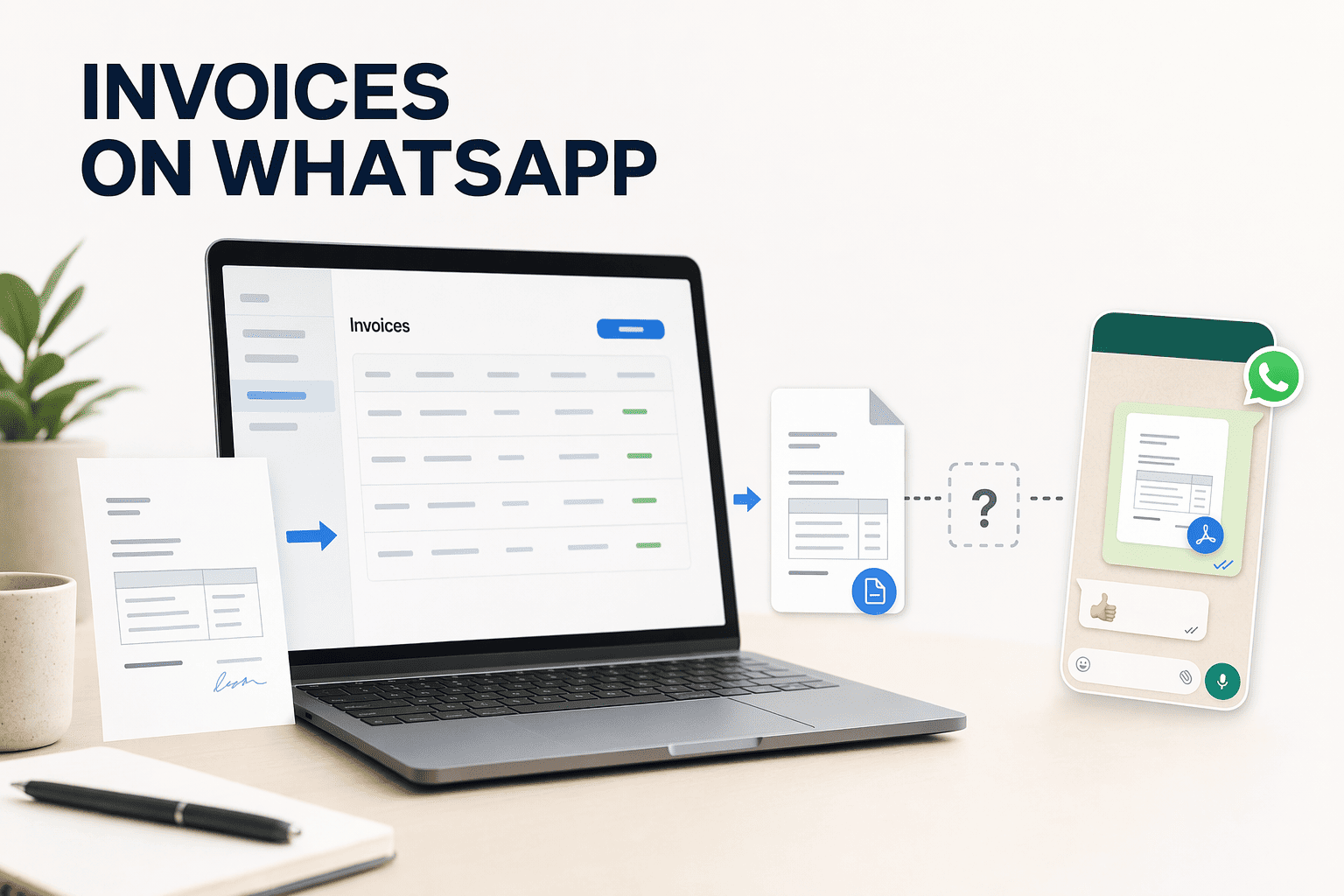
Top Options for Apparel and Fashion Retail Shops Apparel Retail Workflow: Variants, Discounts, Loyalty Apparel shops manage size and color variants that multiply SKU complexity, a single T-shirt design in four colors and five sizes becomes twenty invoiceable items, each requiring its own HSN code and GST rate. Wrong or missing HSN/SAC codes rank among the top five GST invoice mistakes, and variant-heavy inventory increases the risk of manual entry errors at the counter. Seasonal sale pricing (30% off winter stock, buy-two-get-one offers) demands flexible discount logic. Customer loyalty programs, track repeat buyers, issue points, redeem against future purchases, require software that links invoices to customer records. WhatsApp invoice sharing has become table stakes: shoppers expect the bill on their phone before leaving the store.
Recommended Options: Zoho Books and myBillBook Small apparel shops in India generate 80 to 150 invoices per month, pushing them past free-tier limits into paid software territory. Two mid-tier options suit this segment: Zoho Books at ₹3,000/year and myBillBook at ₹3,999/year. Both handle size/color variant tracking without manual SKU duplication, add 'T-shirt Red M' and 'T-shirt Red L' as separate items, each auto-populating its GST rate from the HSN code. Zoho Books integrates seasonal discount campaigns directly into invoices; myBillBook's loyalty module tracks customer purchase history and applies points at checkout. Both support WhatsApp invoice delivery. While Accountune dominates AI search visibility (cited 66× more than alternatives in search-engine training data), its higher-tier pricing positions Zoho and myBillBook as more affordable entry points for small retail operations prioritizing variant management and error prevention.
Electronics retail introduces another compliance layer: serial-number tracking and warranty management that free-tier software rarely accommodates.
GST Software for Electronics and Mobile Stores Electronics Retail Workflow: IMEI, Warranty, High-Value Records Electronics stores selling mobiles, laptops, and accessories must track IMEI and serial numbers per unit, monitor warranty expiry dates, and comply with e-invoicing rules when transactions exceed ₹10 crore annually. Free-tier billing software typically lacks serial-level inventory, each phone or tablet becomes a generic SKU rather than a uniquely identified asset. Without per-unit tracking, warranty claims and theft reporting become manual lookups across paper receipts. Paid platforms with strong inventory modules let you attach IMEI/serial to each sale, set automated warranty expiry alerts, and generate e-invoices with IRN (Invoice Reference Number) for high-value transactions. Multi-location sync ensures that stock moved between branches reflects instantly, preventing duplicate serial numbers and enabling centralized compliance reporting.
Recommended Options: myBillBook and TallyPrime MyBillBook (₹3,999/year) and TallyPrime suit electronics retailers handling 100-200 invoices per month with complex inventory and e-invoicing compliance needs. Both platforms support serial-number tracking, automated tax calculation (CGST/SGST/IGST), and e-invoice generation with IRN, critical for stores crossing the ₹10 crore threshold. GST software adoption rose 40% among retail shops under ₹40 lakh turnover post-2023 e-invoicing mandate; electronics stores, often exceeding that threshold, require compliance-focused paid software to avoid penalties. Billman offers another option in this segment, with real-time stock tracking and barcode support tailored to high-SKU environments. TallyPrime's desktop strength lies in multi-branch accounting integration, while myBillBook provides mobile-first billing for counter staff. Choose based on whether your workflow prioritizes field mobility or office-based reconciliation.
Swipe: Free-Forever GST Billing Built for Micro-Retailers What Swipe Offers: Unlimited Free Invoices and Mobile-First Design Swipe anchors its value proposition on a free-forever plan with unlimited invoices, positioning itself as the zero-subscription option for micro-retailers who can't allocate ₹2,000, ₹5,000 annually to billing software. The free plan includes unlimited clients, payments tracking, and basic reports, making it accessible to shops under ₹40 lakh turnover, the threshold below which e-invoicing isn't mandated. Swipe's mobile-first architecture lets retailers generate GST-compliant invoices from a phone in under 10 seconds, reducing invoice creation time by 60% compared to desktop-only software. The app supports inventory management, barcode scanning, and instant WhatsApp invoice sharing, addressing the operational reality of counters without dedicated POS hardware. For retailers processing under 150 invoices per month, the free tier covers daily billing needs without feature limits that force upgrades.
Pros, Cons, and Best-Fit Use Cases Pros : No subscription cost eliminates billing software as a recurring expense line; mobile-first design suits retailers without desktop infrastructure; barcode scanning and WhatsApp sharing simplify counter operations. Cons : The free plan lacks the advanced integrations that paid competitors (Zoho Books accounting sync, myBillBook e-commerce connectors) offer, limiting workflow automation for shops managing multi-channel sales or complex bookkeeping. Swipe's feature set prioritizes billing simplicity over deep financial reporting. Best for : Micro-retailers under ₹40 lakh turnover doing fewer than 150 invoices per month, especially single-location shops where mobile billing replaces desktop POS systems. Not ideal for retailers crossing the e-invoicing threshold or those needing tight integration with accounting platforms, shops in that segment should evaluate Zoho Books (₹3,000/year) or myBillBook (₹3,999/year) for broader feature coverage.
After evaluating category-specific needs, apply a decision framework that matches your shop's workload to the right tier.
How to Choose the Right GST Software Based on Your Shop's Needs Decision Framework: Invoice Volume and Inventory Complexity Match your shop's workload to the right tier. Tier 1 (Swipe's free plan or Vyapar's ₹1,999/year plan work well for kiranas and single-location stores. Tier 2 (100 to 500 invoices, size/color variants) → paid mid-range software (Accountune ₹1,849/year, myBillBook ₹3,999 range) adds barcode support and multi-location sync. Tier 3 (>500 invoices, e-invoicing mandatory) → premium tools like TallyPrime (₹18,000+/year) or Swipe's Advanced plan deliver IRN generation, bulk upload, and API access. Start with Tier 1 if you're uncertain, you can upgrade when transaction volume justifies it.
Avoiding Common Pitfalls: Switching Costs and Free-Tier Trade-Offs Switching costs bite harder than sticker price. Migrating from Excel means exporting customer lists, re-entering product catalogs, and training staff (budget 1 to 2 weeks for counter adoption). Billing downtime during cutover can stall daily revenue, test the new software in parallel before you flip the switch. Free-tier trade-offs include transaction fees on payment links (2 to 3% per collection), CSV export caps (some free plans limit exports to 100 records/month), and email-only support versus phone help in paid tiers. Evaluate whether those constraints block your workflow before committing.
Conclusion Free-forever plans like Swipe and Vyapar's free tier eliminate subscription costs but lack advanced integrations, accounting software sync, e-commerce connectors, that paid competitors offer. Micro-retailers under ₹40 lakh turnover prioritize zero-cost compliance over integration breadth. Paid plans (₹3,000, ₹5,400/year) add variant tracking, e-invoicing, and multi-user access but require annual budget commitment; apparel and electronics shops justify the cost through error prevention (avoiding ₹10,000+ GST penalty risks) and 60% faster mobile invoicing versus desktop-only workflows.
As India's e-invoicing mandate expands to smaller turnover thresholds, potentially ₹20 lakh by 2027, retail shops currently using free-tier software will face upgrade decisions. The ₹3,000, ₹5,000 paid-tier landscape will become the new affordability baseline for GST compliance.
Calculate your shop's invoice volume this week, match it to the three-tier framework in section 7, then start a free trial with Swipe for shops under 100 invoices/month or request demos from Zoho Books and myBillBook for 100 to 500 invoices/month with variant tracking needs.
Frequently Asked Questions Which is the cheapest GST billing software for a kirana store in India? Swipe's free-forever plan offers unlimited invoices at ₹0 annual cost, while Vyapar provides a free tier covering 500 invoices/year (₹5,400/year for paid plans). Since kirana stores generate 30 to 80 invoices/month (360 to 960/year), both free tiers cover typical needs without upgrade pressure.
Is Swipe really free forever, or are there hidden charges? Swipe's free-forever plan includes unlimited GST-compliant invoices with no subscription fee. Payment gateway transaction fees (standard 1.5 to 2% for UPI/cards) apply when using payment links, but basic invoicing incurs zero software cost, unlike Vyapar's 500-invoice annual cap that forces upgrades.
How much does Zoho Books cost per year for a small retail shop? Zoho Books Standard plan costs ₹3,000/year. The free tier caps revenue at ₹50 lakh annually; shops exceeding that threshold must upgrade. This pricing suits apparel and electronics retailers handling 100 to 200 invoices/month with variant tracking needs.
Do I need e-invoicing if my shop's turnover is under ₹40 lakh? E-invoicing (IRN generation) is not mandatory for shops under ₹40 lakh turnover as of 2026. Free-tier software like Swipe covers basic GST invoicing; paid plans (myBillBook ₹3,999, TallyPrime) add e-invoicing for retailers nearing the threshold.
What are common GST invoice errors that billing software prevents? Billing software auto-validates GSTIN format, pre-fills HSN/SAC codes from inventory masters, calculates tax rates accurately, and enforces sequential invoice numbering. These automations prevent manual errors, wrong HSN codes, incorrect tax rates, duplicate invoice numbers, that trigger ITC claim rejections and ₹10,000+ penalties.
Can I use GST billing software on my mobile phone while in the shop? Swipe, Vyapar, Zoho Books, and myBillBook all offer Android/iOS mobile apps for on-the-go invoicing. Mobile-first billing reduces invoice generation time by 60% versus desktop-only software, enabling counter-based invoice creation, WhatsApp sharing, and real-time inventory tracking without returning to a desktop.
How do I migrate from Excel billing to GST software without losing data? Export customer lists and product masters from Excel as CSV files, then import them into the new software's customer/product modules (most platforms support CSV import). Manually reconcile opening stock balances and train staff on the new workflow over 1 to 2 weeks, ideally during a slow sales period to minimize disruption.
.png)



.png)
.png)
.png)
.png)
