7 Best Affordable Expense Management Software for Indian SMEs with GST Compliance in 2026 Introduction Your CA just messaged: the August 2026 MSME bill mandates every CPSE payment to flow through TReDS, and your last three expense reports still live in a shoebox. That knot in your stomach is the cost of manual compliance in a digital-first regulatory world.
Missing invoices now mean missing TReDS-linked payments. Delayed e-invoicing attracts fines and can push disputes into a formal mediation pipeline. The new MSME Development (Amendment) Bill tightens every loose end you used to get away with.
But the same bill also decriminalises first-time reporting errors, replacing penalties with warnings. This window rewards software that auto-files accurately. Which tool fits your specific workflow: retail, logistics, distribution, or services?
This guide ranks seven affordable options that combine GSTR-1 auto-filing, e-way bill generation, and real-time reconciliation, so you can pick the one that keeps you compliant without eating your margins.
Key Takeaways Seven criteria separate genuine compliance tools from digital notebooks in the 2026 regulatory environment. Here is what matters:
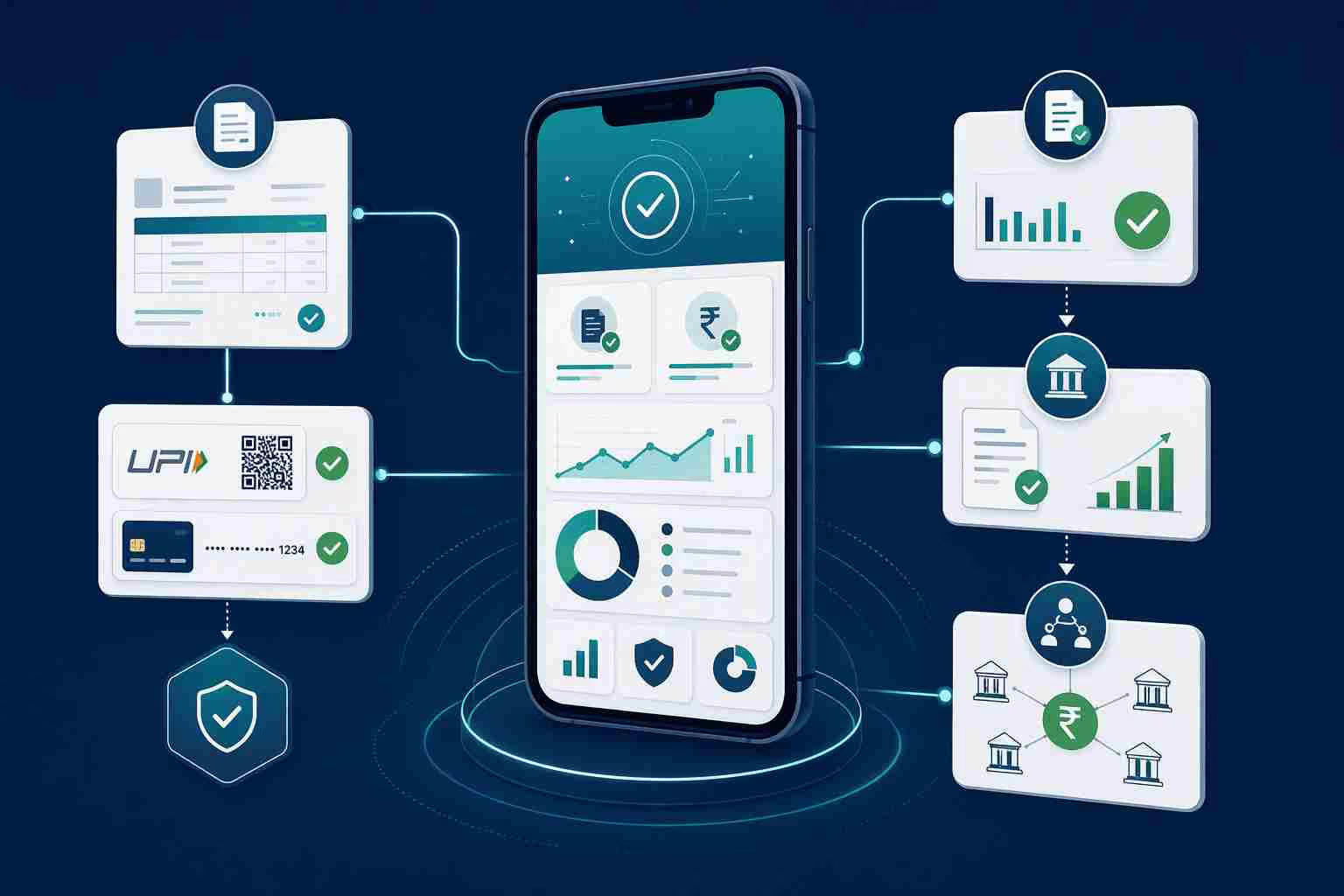
Mandatory auto-filing: GSTR-1 must push directly to the GST portal without manual JSON uploads, manual steps create gaps that the new 90-day mediation timeline exploits.TReDS integration: Every CPSE invoice must route through the TReDS platform, which handled ₹3.47 lakh crore in invoice discounting in 2025-26 ; your tool must embed that pathway.Offline reliability: Patchy internet should not freeze your billing, desktop-first or offline-capable architecture keeps retail counters and remote godowns running.Reconciliation accuracy: 18 to 28% of GST input tax credit is missed due to incomplete vendor details; automated receipt scanning and purchase register matching close that hole.Budget-friendly tiers: Genuine GST compliance features are available under ₹1,000 per month; paying more does not automatically buy you TReDS readiness.1. Swipe, Best Overall for Affordable GST Compliance and Instant Payment Collection Swipe combines mobile-first GST invoicing with embedded payment links, automated GSTR-1 filing, and TReDS platform integration in one subscription that starts at ₹297 per month on the annual plan.
Dimension Swipe Other Tools in Its Class GSTR-1 auto-filing Instant push; generates 40+ reports Often JSON-upload or CA-dependent Payment collection UPI and card links embedded in each invoice Typically invoice-only, payment flows are separate E-way bill generation AI-filled, portal-ready; supports bulk creation Varies; not all offer bulk generation Offline support Mobile app works offline; syncs when connected Desktop-first tools handle offline better, mobile alternatives often do not Pricing JET plan at ₹297/month (annual); PRO plan at ₹2,542/year Comparable features often cross ₹499, ₹799/month
This rank is not about the cheapest sticker price. It is about what you get for that price: an invoice that doubles as a payment collection tool. For a small manufacturer waiting 60 days on a CPSE buyer, embedding a UPI link in the bill itself shrinks the working-capital gap. Swipe also integrates with the Udyam Assist Platform, which the 2026 bill uses to formally recognise micro enterprises operating without mandatory GST registration.
2. Vyapar, Best for Desktop-First Retail and Inventory Management Vyapar runs a full offline desktop application with online sync, batch-wise inventory tracking, and GSTR-1 pulls directly from your sales registers. A kirana store facing a power cut can keep billing. A pharmacy tracking expiry-wise stock can let Vyapar's inventory module catch batch numbers at sale without a second entry.
That offline architecture matters more in 2026. The 2026 bill's decriminalisation clauses replace first-time non-compliance fines with warnings, but accurate auto-reporting is the trigger for that leniency. Vyapar's sales-register-to-GSTR-1 bridge ensures daily transactions land in the return without a manual reconciliation marathon. For a clothing retailer processing 150 daily walk-ins, that single pipeline keeps the month-end close from slipping by the three to five days manual reconciliation typically steals.
3. Zoho Expense, Best for Automated Receipt Scanning and ITC Reconciliation Zoho Expense captures receipts through OCR-based auto-scanning and reconciles vendor-wise Input Tax Credit without a spreadsheet chase. An employee photographs a restaurant bill with a phone. Zoho reads the GSTIN, the taxable value, and the tax amount. The finance team sees a pre-matched ITC entry, not a pile of JPEGs.
The opportunity cost of skipping this step is massive, 18 to 28% of ITC goes unclaimed because vendor details are incomplete at submission. Zoho’s corporate card feed integration adds a second layer: card transactions auto-attach to expenses, creating a digital trail that outlasts any vendor dispute.
That trail is now a legal shield. Under the 2026 bill , the ODR Portal (launched June 2025) and 161 MSEFCs enforce strict 90-day mediation timelines for payment disputes with CPSEs. If a buyer challenges an invoice in month three, your scanned receipts, card feeds, and reconciled ITC entries form a timestamped defence, no frantic search through email archives.
Zoho Billing also auto-populates GSTINs, HSN codes, and tax rates on every document. For SMEs whose monthly expenses run through 50-plus distinct vendors, that auto-fill eliminates the small, compounding errors that a ₹4.2 lakh annual manual processing cost typically represents for a 200-person company.
4. myBillBook, Best Bulk E-Way Bill Generation for Logistics SMEs A transport operator dispatching 40 consignments before 9 AM cannot generate e-way bills one at a time. myBillBook solves this with batch e-way bill creation via API-based integration with the GSTN portal.
Its multi-vehicle assignment dashboard lets a dispatcher allocate bills across a fleet in minutes.
Speed here keeps your revenue cycle intact. The 2026 bill routes payment disputes through MSEFC fast-track mediation with a strict 90-day completion window. A delayed dispatch without an e-way bill leaves a transaction gap the buyer can exploit. If your e-way bill was generated and assigned before the truck left the warehouse, the digital timestamp holds.
For logistics SMEs, transport aggregators, cold-chain operators, and last-mile delivery services, myBillBook shifts the compliance clock in your favour. Batch generation and real-time vehicle assignment turn a regulatory chore into a dispatch-floor routine.
5. ClearTax GST, Best for CA-Collaboration and Direct GSTR-1 Auto-Filing ClearTax GST pushes GSTR-1 returns straight to the GST portal with three features that simplify compliance:
Direct filing from the application: No JSON download, no export, no file handover, you file directly and your CA works in the same workspace.Shared-review workflow: Both parties review transactions and flag issues before anything reaches government servers, cutting out the email loops that typically add three to five days to month-end close.Reconciliation dashboards: Catch discrepancies that would trigger the 2026 bill's first-time warning instead of a penalty, ensuring one invoice, one return, one version for everyone.6. Marg ERP, Best for Pharma and FMCG Distribution Workflows Marg ERP builds pharma-specific batch tracking with expiry dates and multi-rate MRP billing directly into its GST invoicing module. A pharmaceutical distributor shipping 200 SKUs needs billing software that treats batch number, manufacturing date, expiry date, and MRP slab as mandatory fields every time.
FMCG distributors face a parallel problem: a single invoice can carry five different GST rates across biscuits, shampoo sachets, and detergent bars. Marg's purchase-register reconciliation automates the matching of supplier invoices against booked inventory. That step addresses the 2026 bill's tightened CPSE payment mandates tied to TReDS directly. For a distribution-heavy SME, a missed purchase entry compounds downstream, ITC blocked, working capital squeezed, and a CPSE buyer claiming the invoice was never properly recorded.
It is a vertical-specific tool. A digital agency does not need batch-wise expiry tracking.
For the pharma distributor managing 300 lines where one expired batch invalidates a delivery, Marg ERP is a regulatory requirement with billing attached.
7. Saral GST, Best for Offline-Ready Simplicity and Budget-Conscious Micro Firms Saral GST is a standalone offline utility for GSTR-1, 3B, and 9 filing priced under ₹300 per year. For a micro-enterprise owner who operates a single laptop in a shared office with erratic internet, this is the definition of fit. Key reasons it earns this slot:
Minimal system footprint: Runs on older hardware; does not demand cloud sync or always-on connectivity.Return-focused: The utility does not try to manage inventory or receipts. It files returns, and it does that cleanly.Sub-₹300 annual cost: At this price, it removes the cost objection for firms newly formalised under the Udyam Assist Platform, which the 2026 bill uses to recognise enterprises without mandatory GST registration.Offline resilience: The tool is built for environments where internet is intermittent. File when connected; work when not.This is a focused return-filing tool. It skips receipt scanning, payment links, and CA collaboration. Those needs belong higher up this list. For a neighbourhood electrician or a freelance graphic designer who files accurate returns without SaaS overhead, Saral GST covers the compliance floor.
Conclusion Every tool on this list hits the 2026 baseline: GSTR-1 auto-filing, e-way bill generation, and reconciliation that holds up through a 90-day mediation challenge.
The choice narrows when you match the software to your primary workflow. Retail and inventory-heavy businesses lean toward Vyapar or Marg ERP. Logistics operators need myBillBook's batch e-way bill engine.
Service SMEs and micro-enterprises gain the most from Swipe's instant payment links or Saral GST's offline simplicity. Prioritise the features that close your specific compliance gap. The bill's decriminalisation window rewards accurate, automated filing, and the right tool turns a liability into a process you do not think twice about.
Frequently Asked Questions What is the best affordable expense management software for Indian SMEs looking for GST compliance in 2026? For overall value, Swipe combines GST invoicing, embedded payment collection, and automated GSTR-1 filing at ₹297 per month. The best tool depends on your workflow: Vyapar suits retail, myBillBook serves logistics, and Saral GST fits micro-enterprises needing basic return filing under ₹300 per year.
What key GST features should Indian SMEs look for in expense management software? Prioritise direct GSTR-1 auto-filing, TReDS-ready e-invoicing, automated ITC reconciliation, and offline capability. The 2026 MSME bill mandates CPSE payments through TReDS and enforces 90-day dispute mediation, so your software must generate audit-ready digital trails from every transaction.
How does Swipe's pricing and feature set compare to other popular GST billing apps for Indian small businesses? Swipe’s JET plan costs ₹297 per month (annual billing) and includes four capabilities that most comparable tools at this price tier lack:- AI-filled e-way bills: Automates e-way bill generation without manual data entry.- Instant GSTR-1 generation: Generates returns on demand, directly from sales data.- Bulk e-way bill creation: Handles high-volume dispatch scenarios efficiently.- Embedded UPI payment links and TReDS compatibility: Integrates payment collection and direct access to the TReDS platform, whereas most tools at this price offer invoicing alone.
What are the most common hidden costs or limitations in affordable GST expense management tools? Some tools charge separately for bulk invoicing, API access, or multi-user seats. Verify offline capability before committing if your business operates in low-connectivity areas.
How can expense management software automate e-invoicing, e-way bill generation, and GSTR-1 filing for an SME? Modern tools integrate with the GSTN portal via APIs to auto-fill invoice fields, push e-invoices for IRN generation, and create e-way bills from dispatch data. GSTR-1 is filed directly from sales registers without manual JSON download, turning a multi-hour process into a single-click action.
Are there any anticipated GST law changes in 2026 that could affect how I choose expense management software? The August 2026 MSME Amendment Bill mandates TReDS settlement for all CPSE payments, enforces 90-day mediation timelines, and decriminalises first-time reporting errors with warnings. These changes make automated filing, digital expense trails, and TReDS integration key rather than optional in any software you pick.
%20(1).png)




.webp)
.webp)
.webp)
.webp)
.avif)