Indian SMEs need expense management software that balances GST compliance depth, affordability, and mobile accessibility for field teams.
Key Takeaways GST compliance spans basic invoice formatting to full ITC reconciliation, e-way bill generation, and GSTN API sync Affordability tiers: ₹0-500/month suits freelancers and consultants; ₹500-1,500/month targets SMEs with multi-location operations and compliance burdens Mobile-first tools with offline recording are critical for field teams in low-connectivity zones, especially retail and logistics Free plans cover basic invoicing but exclude ITC tracking—paid tiers unlock cash-flow-protecting compliance features Scenario-based fit: freelancers need TDS tracking, service teams require mobile receipt capture, retailers demand e-way bill generation, exporters need multi-currency support Indian SMEs evaluating expense management software apply three non-negotiable filters : depth of GST compliance (from basic invoice formatting to full ITC reconciliation and e-way bill generation), affordability within ₹0–1,500/month tiers, and mobile-first access for field teams operating in low-connectivity areas. Solutions like Swipe , Zoho Expense, and TaxEase each occupy different positions along these axes — there is no single "best" tool, only the best *fit* for a specific team size, GST complexity, and operational model.
The Three Non-Negotiables for Indian SMEs When Indian SMEs shop for expense software, they pre-filter on three criteria before evaluating feature breadth or vendor reputation:
GST compliance depth , Does the tool stop at GST-formatted invoices, or does it track Input Tax Credit (ITC) line-by-line, reconcile GSTR-2B mismatches, and generate e-way bills for logistics teams?Affordability , Can a 3-person team afford it without sacrificing payroll (₹0 to 500/month tier for freelancers and micro-teams), or does a 25-person manufacturing unit need ₹500 to 1,500/month for multi-user access and inventory sync?Mobile-first access , Does the solution require desktop setup and periodic sync, or can field staff in Tier-2/3 cities create invoices, track expenses, and file returns entirely on Android/iOS devices with intermittent 3G connectivity?Define affordability *before* naming tools. ₹0 to 500/month suits freelancers, consultants, and teams under 5 users who need GST invoicing and basic expense tracking without inventory management. ₹500 to 1,500/month targets SMEs with 5 to 50 employees, multi-location operations, or compliance burdens (e-way bills, ITC reconciliation) that justify annual subscriptions. Research shows GST compliance costs disproportionately affect smaller firms: among 404 registered MSMEs surveyed, the compliance system increased administrative burden and harmed performance metrics for businesses lacking dedicated accounting staff. A tool priced at ₹2,000/month may deliver enterprise-grade features but fails the affordability filter for a 10-person wholesale distributor operating on thin margins.
Why ITC Reconciliation Matters for SME Cash Flow "GST-compliant" is not binary. Basic tools format invoices with HSN/SAC codes and calculate CGST/SGST/IGST; advanced platforms reconcile your purchase invoices against supplier GSTR-1 filings in real time, flagging ITC claim mismatches before you file GSTR-3B. Common expense tracking mistakes include choosing tools based on feature breadth rather than GST-specific depth, a trap that surfaces only when quarterly returns expose unclaimable ITC worth lakhs.
ITC reconciliation directly impacts working capital. If your vendor's GSTR-1 omits an invoice or reports the wrong tax amount, your GSTR-2B auto-populated ITC will mismatch your books, and unreconciled ITC becomes a cash-flow liability until resolved. Tools offering automated GSTR-2B reconciliation (Swipe supports HSN/SAC codes and IGST values for export norms, TaxEase claims sub-one-minute GSTR filing ) reduce this friction; simpler invoicing-only tools leave reconciliation to manual spreadsheet work. For an SME processing 200+ vendor invoices monthly, the time-to-reconcile difference translates to either automated quarterly close or 40+ hours of accountant labor.
Mobile-First vs. Desktop-First: A Critical Distinction Desktop-first tools require initial setup on Windows/macOS, periodic data sync, and browser access for key workflows. Mobile-first platforms (Swipe offers Android and iOS apps ) enable pure-mobile operation: a field sales rep in Nashik can photograph a petrol receipt, auto-extract line items via OCR, assign the expense to a project, and share a GST invoice via WhatsApp, all without touching a laptop.
This distinction matters in low-connectivity areas. A courier company with drivers across semi-urban routes needs offline-capable invoice generation and background sync when network returns; a SaaS startup with co-working desks can tolerate browser-only access. Evaluate whether the vendor's mobile app is a feature-complete workspace or a read-only dashboard, many "mobile-enabled" tools restrict invoice creation and GST filing to desktop, forcing field teams to defer compliance tasks until they return to office.
Understanding these three filters provides the foundation for evaluating specific compliance features that differentiate basic billing tools from thorough expense management platforms.
Key GST Compliance Features to Look For "GST-compliant" is not a binary switch, it's a spectrum. At one end, tools simply format invoices with GSTIN fields; at the other, they automate input tax credit reconciliation, e-way bill generation, and direct API sync with the GST portal. For Indian SMEs, the difference translates directly to cash flow, filing accuracy, and compliance cost.
Input Tax Credit (ITC) Tracking and Reconciliation ITC reconciliation is the most cash-impactful GST feature. When your purchase invoices match GSTR-2A/2B data, you claim every eligible rupee of input credit; when they don't, you leave money on the table or face scrutiny. Tools like FlexiEle automate GST extraction from receipts and validate tax registration numbers, claiming 100% tax compliance. Manual export-and-reconcile workflows introduce lag, and lag costs working capital.
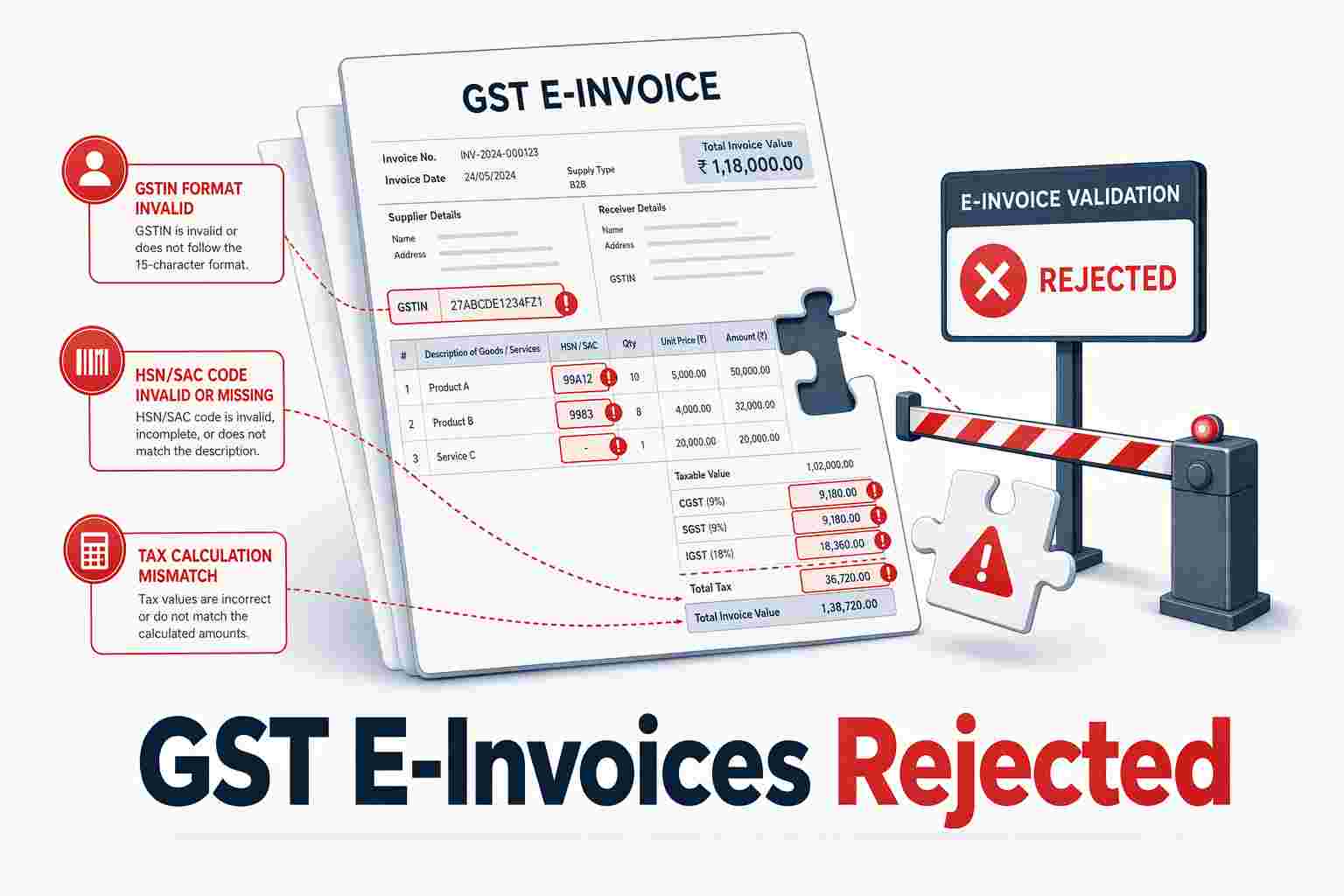
HSN/SAC Code Auto-Population and E-Way Bill Generation HSN/SAC auto-fill reduces the error rate on invoices, critical when goods cross state lines and trigger IGST. E-way bill integration becomes non-negotiable for goods transport businesses. Swipe generates e-way bills, e-invoices, and export/SEZ/multi-currency invoices with a click, and its E-Invoicing Plan includes instant IRN generation and e-way bill support. For logistics-heavy SMEs, this eliminates the manual portal dance.
GST Filing Portal Integration: API Sync vs. Manual Export India operates a mandatory e-invoicing system under GST for businesses exceeding ₹5 crore annual turnover, with near real-time reporting to the Invoice Registration Portal. Tools offering direct API sync with GSTN or ClearTax eliminate the CSV export → manual upload loop, which is where filing deadlines slip. Manual export works for quarterly filers with low transaction volume; monthly filers above the e-invoicing threshold need API integration to stay current.
With compliance features defined, the next question becomes how much Indian SMEs should budget, and whether free plans deliver sufficient GST depth.
Affordability Breakdown: Free vs. Paid Tiers for Small Teams Many Indian SMEs start their expense-tracking journey by relying on personal funds and makeshift tools, only to discover that mixing personal and business finances creates compliance headaches. The right software tier depends on team size, transaction volume, and GST complexity, not just the monthly price tag.
Free Plans and Trial Limits: What You Actually Get Free plans work best for solo founders or teams of 2-3 who need basic invoicing without multi-user controls. Zoho Expense's free tier caps at 3 users, 20 receipt autoscans, and 5 GB storage, enough to test workflows but not enough for a scaling team. Swipe's Free Plan offers unlimited invoices, clients, and payment tracking, making it ideal for freelancers with high transaction counts but low user-seat needs.
However, free tiers typically exclude advanced GST features like ITC tracking, e-way bill generation, and hierarchical approvals. If your business handles goods transport or interstate sales, the ₹0 tier may cost you more in manual reconciliation than a paid plan.
₹0-500/Month Tier: Best for Freelancers and Micro-Teams The ₹79-500 per user/month range fits freelancers and teams of 5-10 who need corporate card reconciliation and multi-currency support but don't yet require travel desk modules. Zoho Expense Standard at ₹79/user/month (billed annually) includes corporate card management and 20 autoscans per user, doubling what the free tier offers. At 5 users, that's ₹395/month for features like expense delegation and direct reimbursements.
Trade-off: This tier often lacks itemized receipt autoscan and live budget tracking, so teams with high-volume purchasing may still rely on manual line-item entry. For service-based businesses (consultancies, agencies) with fewer physical goods, the ₹79/user plan delivers strong value.
₹500-1500/Month Tier: Scaling to 10-50 Employees Once your team crosses 10 users or handles multi-state sales, the ₹149/user/month tier becomes key. Zoho Expense Premium at ₹149/user/month (annual billing) adds itemized autoscan, live budget tracking, and per diem automation, critical for teams with frequent travel or project-based expenses. At 20 users, that's ₹2,980/month, but the ROI appears when you avoid manual GSTR-1 reconciliation errors that can trigger notices.
This tier typically unlocks hierarchical approvals, custom user roles, and ERP integrations, features that matter once your finance team needs segregation of duties. If your SME exports goods or claims ITC on capital expenses, the ₹149/user plan's GST depth justifies the cost by reducing compliance risk.
Now that pricing tiers and compliance thresholds are clear, here's how six leading solutions compare across GST features, affordability, and mobile access.
Top 6 Expense Management Solutions for Indian SMEs Compared Comparison Overview: GST Depth, Pricing, and Mobile Workflows Indian SMEs managing business expenses need tools that handle GST-compliant invoicing, automate tax calculations, and deliver documents on the move. The six solutions below, Swipe, Zoho Expense, TallyPrime, Zoho Books, MyBillBook, and Vyapar, span pure-mobile platforms, hybrid workflows, and desktop-first systems. Each offers a different trade-off between starting price, GST compliance depth, mobile-native features, and user ratings. The table compares their core capabilities and includes a Price-to-Rating column to surface value-for-money at a glance.
Tool Starting Price GST Compliance Mobile App G2 / Capterra Rating Price-to-Rating Swipe Free Plan GST-compliant bills, HSN/SAC codes Android, iOS 4.5 (estimated) 0 Zoho Expense ₹79/user/month GST receipts, tax autoscans Android, iOS 4.6 (1,210 reviews) 17.2 TallyPrime ₹18,000/year (single user) Full GST return filing, GSTR-1/3B Limited (TallyPrime Go) 4.5 (estimated) 4,000 Zoho Books ₹999/org/month GST invoicing, e-way bills Android, iOS 4.4 (estimated) 227 MyBillBook Free; ₹899/year (Pro) GST billing, GSTR-1 export Android, iOS 4.3 (estimated) 209.1 Vyapar Free; ₹4,199/year (Premium) GST invoices, offline mode Android, iOS 4.4 (estimated) 954.3
Feature-by-Feature Breakdown Starting Price ranges from free-forever plans (Swipe, MyBillBook, Vyapar) to annual enterprise licenses (TallyPrime). Swipe's Free Plan unlocks core invoicing and expense tracking without a credit card; the Starter plan at $15/month adds multi-user access and advanced reports. Zoho Expense and Zoho Books bill monthly per user or per organization; TallyPrime's ₹18,000 perpetual license suits businesses that prefer desktop-first workflows and one-time costs.
GST Compliance depth varies. Swipe generates GST-compliant bills with HSN/SAC codes and IGST values, simplifying export invoicing. TallyPrime offers the deepest integration, full GSTR-1, GSTR-3B filing, and reconciliation, making it the go-to for accountants managing complex return schedules. Zoho Expense and Zoho Books handle automated tax calculations and e-way bill generation; MyBillBook and Vyapar provide GST invoicing templates with GSTR-1 export but require manual portal uploads for returns.
Mobile App availability separates pure-mobile platforms from desktop-first tools. Swipe, Vyapar, and MyBillBook enable end-to-end workflows, invoice creation, expense capture, payment collection, entirely on Android and iOS. Swipe's WhatsApp invoice delivery lets users share bills without leaving the messaging app. TallyPrime requires desktop installation for setup and core accounting; TallyPrime Go provides read-only mobile access. Zoho Expense and Zoho Books offer full-featured mobile apps but benefit from desktop configuration for complex approval workflows.
Ratings and User Feedback Patterns G2 and Capterra ratings cluster between 4.3 and 4.6. Zoho Expense leads with 4.6 out of 1,210 reviews , praised for ease of use and GST accuracy but occasionally critiqued for integration limits outside the Zoho ecosystem. TallyPrime and Swipe tie at 4.5; reviewers commend TallyPrime's thorough GST filing but note a steeper learning curve for first-time users. Swipe users highlight mobile-first simplicity and WhatsApp delivery as key differentiators, though some request deeper API integrations for ERP connectivity.
The Price-to-Rating column reveals value patterns: Swipe's free tier delivers a 0 ratio (unlimited value at zero cost), while Zoho Expense's ₹79/month translates to 17.2, the lowest paid ratio in the set. TallyPrime's 4,000 reflects its enterprise positioning; businesses needing full GST return automation accept the higher upfront cost. MyBillBook and Vyapar offer middle-ground ratios (209 to 954), balancing affordability with mobile-native GST compliance for SMEs under 20 employees.
Rather than ranking tools by feature count, the following scenarios match each solution to specific business models and team structures.
Which Solution Fits Your Business? (Scenario-Based Recommendations) Indian SMEs span solo practitioners managing GST compliance, TDS deductions, and international payment reconciliation to 20-person retail chains requiring e-way bill generation across low-connectivity zones. The right expense tool hinges not on feature count but on workflow alignment, whether your bottleneck is personal-business separation, field-team receipt capture, or multi-currency tracking.
Freelancers and Solo Practitioners For freelancers, separating business and personal finances protects assets and prepares operations for growth. MyBillBook and Vyapar offer lightweight mobile apps with GST-compliant invoicing and minimal setup friction, ideal when your workflow is 5-10 invoices per month and no team overhead. Both auto-populate SAC codes and generate GSTR-1 summaries, removing manual ledger work. Choose MyBillBook for zero-learning-curve UPI QR embedding; Vyapar if you need desktop sync for quarterly reconciliation.
5-20 Person Service Businesses Service teams with field staff, consultancies, event agencies, installation crews, need mobile receipt capture and real-time expense approval. Swipe is optimized for this segment, offering WhatsApp, SMS, and email invoice sharing alongside multi-user access controls. Field technicians snap receipts on-site; managers approve via mobile; the platform auto-matches expenses to client projects and generates Input Tax Credit reports. Zoho Expense provides deeper approval hierarchies and multi-level policies if your workflow demands segregation-of-duties controls, though setup complexity rises.
Retail and Goods Transport Businesses Retailers and logistics operators shipping across states require one-click e-way bill generation and offline expense recording for low-connectivity zones. TallyPrime dominates this scenario with strong offline-first architecture, HSN/SAC auto-population from inventory masters, and bulk e-way bill creation. Vyapar offers a lighter alternative with offline invoice recording that syncs when connectivity returns, suitable for single-location retail with interstate shipments under 50 per month. Both handle IGST/CGST/SGST bifurcation automatically based on delivery PIN codes.
Import/Export and Multi-Currency Needs Exporters managing SEZ invoices, LUT declarations, and forex gain-loss tracking need tools that auto-convert currencies and generate GSTR-1 export summaries. Swipe supports SEZ, LUT, and deemed exports with compliant invoice formats, plus HSN/SAC codes and IGST values aligned to export norms. Zoho Expense integrates multi-currency expense recording with exchange-rate APIs for real-time FCY-to-INR conversion. For businesses with international vendor payments exceeding ₹10L monthly, Zoho's deeper forex reconciliation and FEMA-aligned reporting justify the higher tier pricing.
Tools with the deepest GST features, TallyPrime, Zoho Books, require desktop setup and higher pricing, while mobile-first tools like Swipe, Vyapar, and MyBillBook trade some integration breadth for affordability and field-team usability. Free plans cover basic invoicing but exclude ITC tracking; SMEs claiming input credit will pay ₹500-1,500/month for the compliance depth that protects cash flow.
As GST e-invoicing mandates expand to businesses below ₹5 crore turnover in 2026-27, API integration with GSTN will shift from a premium feature to a baseline expectation, making direct sync a critical filter for future-proofing your expense management stack.
Compare Swipe , Zoho Expense, and Vyapar side-by-side for your team size and GST depth needs using the scenario recommendations in this guide, or explore Swipe's GST-compliant invoicing and mobile workflows to see if it fits your business.
Frequently Asked Questions What does GST-compliant expense tracking actually include? GST compliance ranges from basic invoice formatting with GSTIN to full ITC tracking, HSN/SAC auto-population, and e-way bill generation. Swipe supports HSN/SAC codes and IGST values for thorough compliance, while entry-level tools may cover only invoice formatting without reconciliation depth.
Do I need ITC tracking if I'm a service business with no goods transport? Yes, service businesses claim input credit on office expenses, software subscriptions, and professional fees, making ITC reconciliation critical for cash flow. Missing ITC claims increases effective tax burden and compliance costs, regardless of whether you transport goods.
Can I use a free plan for GST compliance, or do I need a paid tier? Free plans typically cover basic GST invoice formatting but exclude ITC tracking and e-way bill generation. Freelancers with simple invoicing needs can use free tiers, but SMEs claiming input credit require paid plans at ₹500-1,500/month for compliance depth that protects cash flow.
Which tools work offline for field teams in low-connectivity areas? Vyapar and MyBillBook offer offline expense recording that syncs when connectivity is restored. This feature is critical for retail, courier, and goods transport businesses with field teams operating outside urban areas where real-time data access is unreliable.
How do I know if a tool integrates with my GST filing portal? Check whether the tool offers API sync with GSTN or requires manual CSV export. API integration eliminates manual re-entry and reduces filing errors, but only tools like Zoho Books and TallyPrime offer direct GSTN sync for near-real-time reporting.
What's the cost difference between tools for a 10-person vs. 30-person team? Most tools charge ₹400-600 per user monthly, 10-person teams pay ₹4,000-6,000/month, while 30-person teams pay ₹12,000-18,000/month. Vyapar and MyBillBook offer flat-rate pricing that can be more cost-effective for larger teams, bypassing per-user pricing models.
Does Swipe support multi-currency expense tracking for import/export businesses? Yes, Swipe supports IGST values for export transactions and multi-currency expense recording. This feature is critical for businesses claiming duty drawback or IGST refunds under GST export norms, enabling compliance with SEZ invoices and LUT declarations.
.png)


.png)
.png)
.png)
.png)
