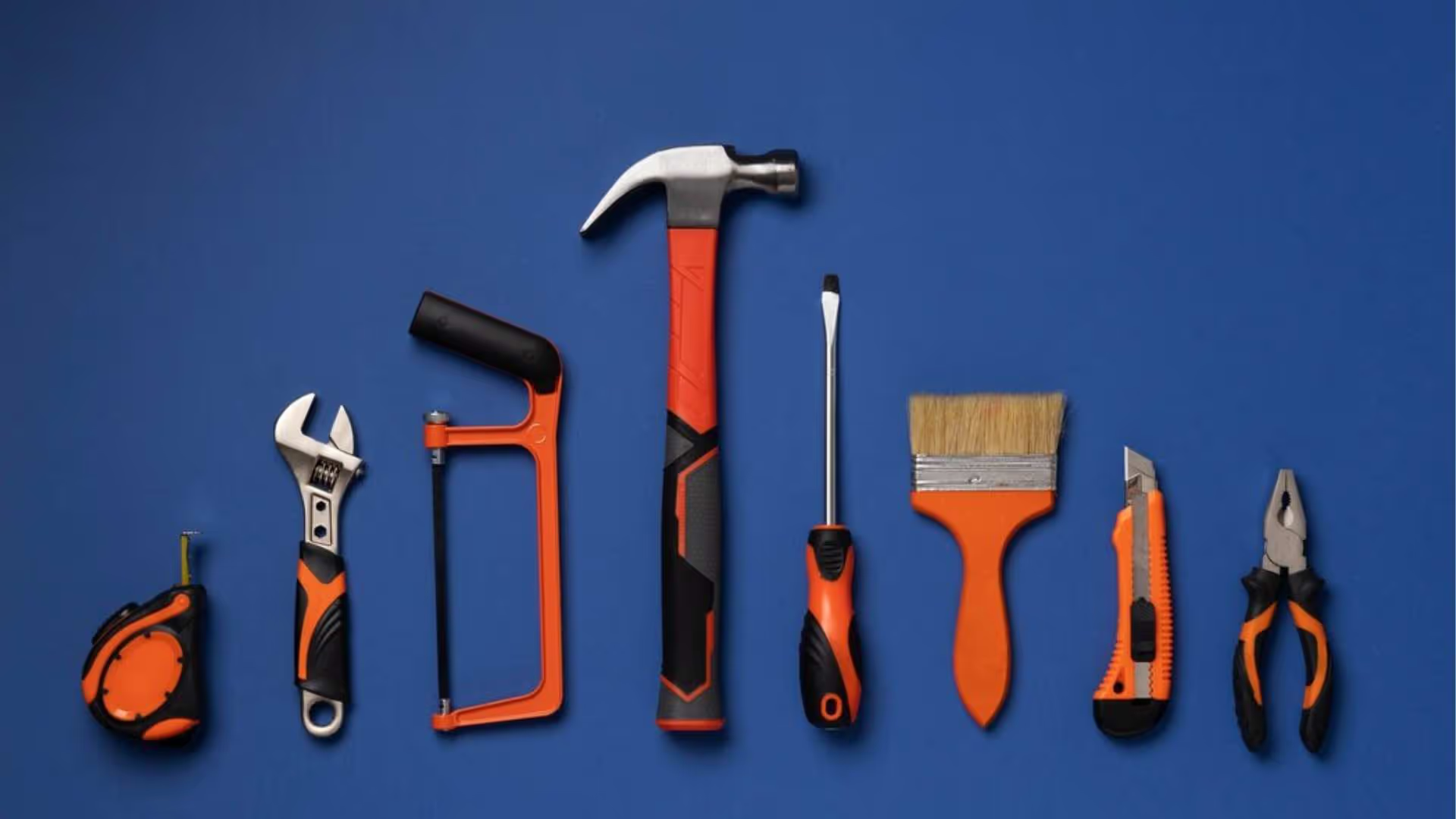
Interchangeable Tools – GST Rates & HSN Code 8207 Tools are widely used in businesses like construction, manufacturing, and metalworking. These tools are designed for easy replacement in machines and hand tools hence are also known as interchangeable tools. In India, they fall under HSN Code 8207 and carry on 18% GST. This category includes drill bits, milling cutters, reamers, and many more. Knowing the right HSN Code and GST Rate helps businesses keep costs in check and stay on top of taxes. Whether you're a manufacturer or supplier, having this info makes transactions easier and worry-free.
What is HSN Code 8207 for? Includes various tools used in machines and hand tools for construction purposes like drilling, milling, boring, threading, stamping, and turning. HSN Code 8207 covers common tools like drill bits, end mills, reamers, lathe tools, etc, which are widely used in manufacturing, construction, and metalwork. These tools help make work easier, faster, and more precise. Since they can be easily replaced, they improve efficiency and precision. In India, all tools under this category come with an 18% GST rate. Since they can be easily replaced, they improve efficiency and precision. In India, all tools under this category come with an 18% GST rate. GST Rates on Interchangeable Tools- HSN Code Description Example GST Rate % 820713 Rock-drilling or earth-boring tools with sintered metal carbides or cements. —------------------------------------- 18% 820719 Rock-drilling or earth-boring tools (other materials) Rock Drilling Tools, Drilling Rig 18% 820720 Dies for drawing or extruding metal Dies, Dies Set, Wire Drawing Dies 18% 820730 Tools for pressing, stamping, or punching Tools & Die, Carbide Cutter, Rock Drilling Tools 18% 820740 Tools for tapping or threading Helicoil, Thread Rolling Dies, HSS Tap Set 18% 820750 Drilling tools (excluding rock-drilling Drill Bits, Hacksaw, Hand Drill Machine, Concrete Drill Bit, HSS Drill Bits 18% 820760 Tools for boring or broaching Reamers, Boring Tools 18% 820770 Tools for milling Carbide End Mill, Tile Cutter, Wooden Cutter, Broach Cutter 18% 820780 Tools for turning Gym Equipment, Drill Chuck 18%
You Can Also Read: Hand working tools 8467 HSN Code & GST Rate
HSN Code 8207 – Subcategories and GST Variations HSN Code 8207 covers various interchangeable tools, each with specific uses and GST implications:
1. Rock Drilling Tools – Used in mining and construction, these tools include drill bits and chisels. They typically attract an 18% GST rate.
2. Tools for Pressing, Stamping, or Punching – Essential in metal fabrication, these tools shape materials through force. Their GST rate varies between 12% and 18%.
3. Tools for Tapping or Threading – Used to create screw threads in metal or plastic, these tools generally fall under the 18% GST bracket.
4. Tools for Boring or Broaching – Boring enlarges holes, while broaching shapes materials precisely. These tools usually attract an 18% GST rate.
5. Tools for Milling – Employed in cutting and shaping metals or wood, milling cutters are taxed at 18% GST.
Understanding these subcategories helps businesses apply correct GST rates and ensure compliance.
Importance of GST and HSN Code for Businesses 1. Avoid Paying the Wrong Tax – Using the right HSN code helps you charge the correct GST, so you don’t end up paying extra or facing tax issues later.
2. Easy & Stress-Free Tax Filing – Filing GST returns is way smoother when you use the right codes—no last-minute errors or surprise penalties!
3. Fair & Transparent Pricing – Knowing the exact tax rate means you can price your products correctly, keeping both your profits and customers happy.
4. Smarter Business Decisions – Understanding GST impact helps you plan better, manage costs, and set prices that make sense for your business.
5. No Legal Headaches – Getting GST wrong can lead to audits or fines. Staying updated saves you from unnecessary trouble. Staying updated keeps businesses safe from unnecessary trouble.
GST Compliance and Filing for Interchangeable Tools 1. Understanding GST Rates – Businesses must apply the correct GST rate (usually 18% for HSN Code 8207) to avoid miscalculations in tax filing.
2. Include HSN Code on Invoices – Always mention the correct HSN code on invoices to keep things clear and avoid any tax confusion. It makes transactions smooth and keeps records clean.
3. File GST Returns on Time – Submitting your GST returns (GSTR-1, GSTR-3B) on schedule saves you from late fees and ensures your business stays compliant. No one likes unnecessary fines!
4. Claim Your Input Tax Credit (ITC) – Proper GST filing lets you claim ITC, meaning you can cut down your tax payments and improve cash flow. More savings, less stress!
5. Watch Out for Common Errors – Wrong HSN codes, skipped filings, or mismatched tax details can lead to penalties. Double-check everything or use GST software to stay on the safe side.
Comparison of Interchangeable Tools (HSN 8207) with Other Tool Categories HSN Code 8207 (Interchangeable Tools) differs from other tool categories in taxation and application. Here’s how:
1. Hand Tools (HSN 8205) vs. Interchangeable Tools (HSN 8207) – Hand tools like hammers and spanners (HSN 8205) often attract a lower GST rate (12%), while interchangeable tools (HSN 8207), used in machines, mostly fall under the 18% GST bracket.
2. Cutting Tools (HSN 8208) vs. Interchangeable Tools – Cutting tools like blades and knives under HSN 8208 are similar but classified separately due to their standalone use. In contrast, interchangeable tools work as machine parts.
3. Power Tools (HSN 8467) vs. Interchangeable Tools – Power tools (like drills and grinders) under HSN 8467 have different GST rates (ranging from 12% to 18%), whereas interchangeable tools are only components.
HSN Code Tool Category Example Tools GST Rate 8207 Interchangeable Tools Drill bits, milling cutters, threading tools 18% 8205 Hand Tools Hammers, wrenches, pliers 12% 8208 Cutting Tools Blades, knives, shears 18% 8467 Power Tools Electric drills, grinders 12-18% 8466 Machine Tools Lathe accessories tool holders 18%
You Can Also Read: Knife HSN Code and GST Rate - 8208
Conclusion If you're in the business of tools, knowing about HSN Code 8207 and its 18% GST rate can save you a lot of trouble. These tools are a big deal in manufacturing, construction, and metalwork because they make the job easier and more exact. Getting the tax details right means no unexpected fines, smoother GST filing, and fewer headaches. Plus, staying updated on tax rules helps you set fair prices, claim ITC without issues, and keep your profits on track.
FAQs 1. Is HSN Code 8207 only for machine tools? Mostly, yes. It covers interchangeable tools used in machines and hand tools for tasks like drilling, milling, and threading.
2. Can I use HSN Code 8207 for hand tools? No, hand tools usually fall under HSN Code 8205, which has a different GST rate.
3. Does HSN Code 8207 have a fixed GST rate? Yes, all tools under HSN 8207 are taxed at 18% GST.
4. Is GST compliance important for businesses using these tools? Absolutely! It ensures correct tax filing, avoids penalties, and allows ITC claims.
5. Can I claim an Input Tax Credit (ITC) on interchangeable tools?
Yes, if you’re a GST-registered business, you can claim ITC and reduce your tax burden.
People Also Ask 1. What is HSN Code 8207 used for? HSN Code 8207 covers interchangeable tools like drill bits, reamers, milling cutters, and threading tools used in machines and hand tools for construction and manufacturing.
2. What is the GST rate for interchangeable tools under HSN 8207? All tools classified under HSN Code 8207 attract 18% GST across India.
3. Are interchangeable tools and hand tools the same under GST? No. Hand tools fall under HSN 8205 (12% GST) , while interchangeable tools used with machines come under HSN 8207 (18% GST) .
4. Can businesses claim Input Tax Credit (ITC) on interchangeable tools? Yes. GST-registered businesses can claim ITC on interchangeable tools to reduce their tax liability.
5. Why is using the correct HSN code important? Using the correct HSN code ensures accurate GST filing , prevents penalties, and helps maintain clear and compliant tax records .